
16 Oct Itching in the ear: a symptom with many possible causes
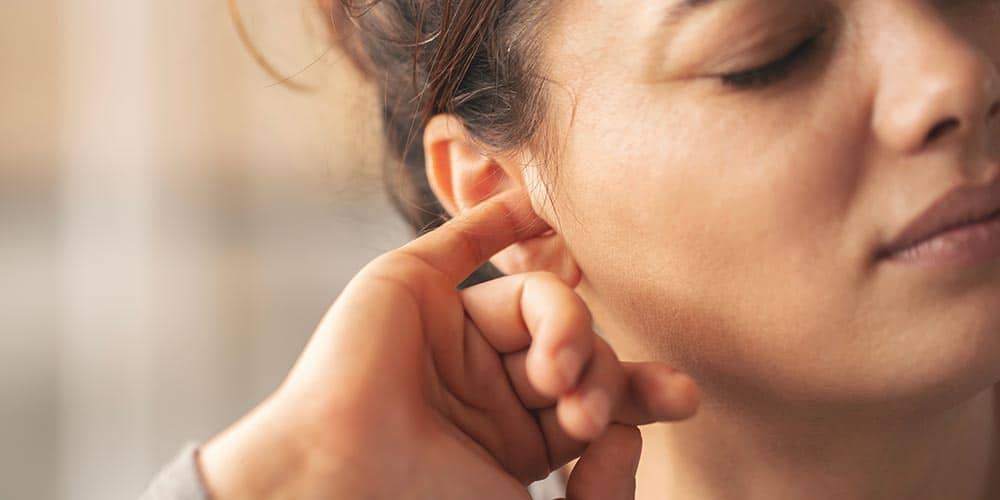
A slight itch, a brief tickle - and suddenly your attention is focussed entirely on your ear. The sensation usually passes quickly, but sometimes it persists or returns again and again. The reasons for this are as varied as the sensation itself: from dry skin and allergic reactions to inflammation of the ear canal. It's worth taking a closer look, because the ear is more sensitive than you might think.
Where in the ear can itching occur?
A scratching sensation can occur in various areas of the ear.
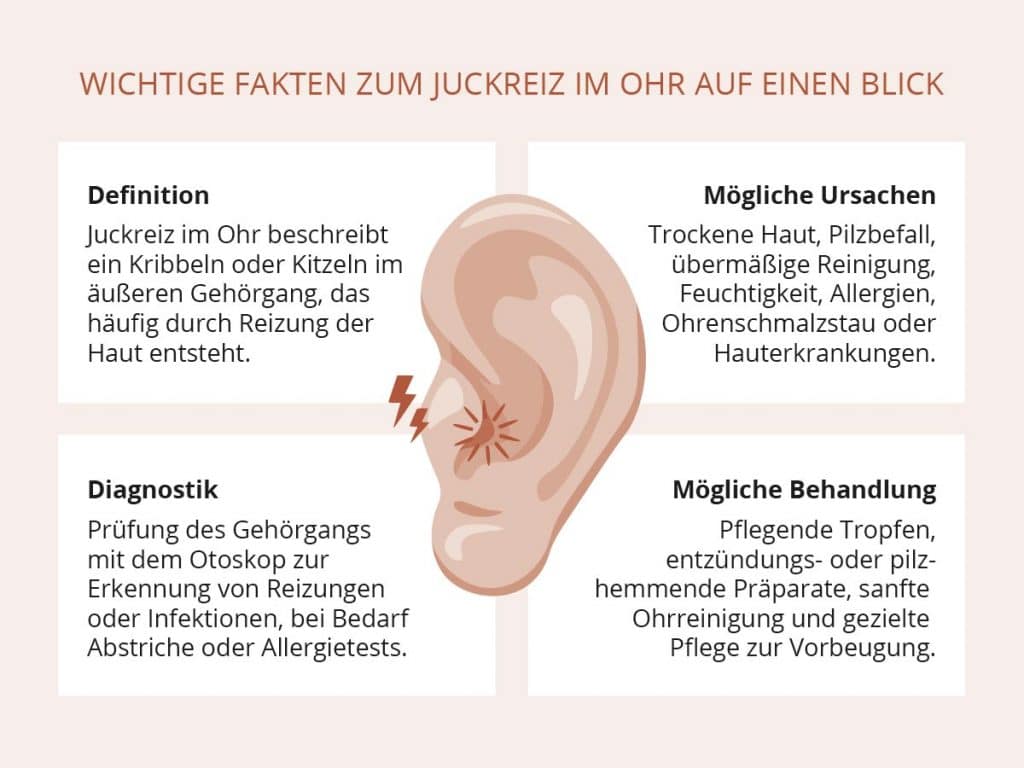
It most frequently affects the outer part, i.e. the auricle and the external auditory canal. The auricle consists of elastic cartilage covered by a thin skin. This skin continues at the entrance to the ear canal and remains particularly sensitive there.
The external auditory canal is slightly curved inwards and ends at the eardrum, which forms the seal to the middle ear. Its skin has fine hairs and special glands that produce earwax. If its composition or quantity changes, this can easily lead to itching or irritation.
Deeper in the ear - i.e. at the eardrum or in the middle ear - there are hardly any nerve fibres that could trigger itching. Sensations from these areas are therefore usually perceived as diffuse tingling or deep-seated itching, although they originate in the outer ear.
What are the causes of itching in the ear?
Tingling in the ear occurs when the sensitive skin in the ear canal or on the outer ear is irritated. This can manifest itself as stinging, deep-seated tickling or an unpleasant feeling of tension. Some people feel as if there is "something stuck in their ear" that they cannot reach. There are many triggers for this:
Dry skin
The skin in the outer ear and at the entrance to the ear canal is sensitive and depends on a balanced interaction between moisture and earwax. If this natural balance is disturbed, the skin dries out, becomes tight and starts to itch. After frequent showering, bathing or swimming in particular, too much earwax can be rinsed out, resulting in a lack of protective film.
Dry room air, frequent wearing of in-ear headphones or hearing aids and intensive ear cleaning put additional strain on the skin. Typical symptoms are a fine feeling of tension, tiny flakes of skin or a tingling sensation in the ear canal.
Earwax deposits
The so-called. Cerumen fulfils an important protective function in the ear. It keeps the skin in the ear canal supple, traps dust and dirt particles and has a slight antibacterial effect. Normally, the cerumen is slowly transported outwards through natural chewing movements, where it dries up and falls off.
If this self-cleaning mechanism is disrupted, earwax can accumulate and harden. This happens, for example, if the ear canals are narrowed, the ear skin is very hairy or if earplugs, headphones or hearing aids are used frequently. Cotton buds also often push wax deeper into the ear canal instead of removing it.
Those affected often feel a dull itch, a foreign body sensation or slight pressure in the ear. In some cases, there is also a temporary loss of hearing or a crackling sensation when chewing.
Allergic reactions
The skin in the ear reacts sensitively to certain substances that come into contact with it. Metals in earrings or ingredients in cosmetics, shampoos and skin care products are often the triggers for itching. If such substances come into contact with the sensitive skin of the pinna or the ear canal, the immune system can react with a Contact allergy The skin reddens, swells slightly and begins to itch intensely.
Typically, the itching occurs suddenly, often accompanied by a warm or burning sensation. Sometimes a slight rash develops or the skin appears sore and irritated. If contact with the trigger persists, the symptoms can worsen.
Inflammation of the external auditory canal
Otitis externa is one of the most common causes of persistent itching in the ear. The sensitive skin that lines the ear canal becomes inflamed - usually due to bacteria or, more rarely, fungi. Even tiny injuries caused by cleaning or scratching can pave the way for germs.
Typical symptoms include intense itching, which can quickly develop into burning or pain, as well as a feeling of warmth in the ear. Some sufferers also notice that the ear canal is swollen or oozes clear or purulent fluid. In severe cases, hearing may be impaired because the ear canal is constricted by the swelling.
Otitis externa often occurs after swimming or bathing, when moisture remains in the ear and the environment becomes favourable for germs. This is why it is also known colloquially as "swimmer's ear".
Skin diseases
Eczema, neurodermatitis or psoriasis change the structure of the skin: it becomes drier, flakier and loses its protective function. As a result, it reacts to even minor irritations with itching or redness.
A persistent or recurring itch is typical, which often manifests itself with fine scales or cracked skin. Those affected often describe that the ear canal is tight or feels sore. In the case of psoriasis, small, silvery, shiny skin flakes may also be visible, while atopic dermatitis tends to be characterised by red, itchy areas.
Scratching or cleaning usually worsens the symptoms because the already sensitive skin is further injured.
Fungal infections
Fungi can also infect the external auditory canal and cause severe itching. This form of inflammation is called otomycosis. Yeasts or moulds are often involved, which feel particularly at home in the ear in a warm and humid climate. This is the case, for example, if water remains in the ear after swimming or showering or if you are in tropical regions.
A fungal infection is typically characterised by an intense, deep-seated itch that can intensify from day to day. Some sufferers experience a feeling of pressure or a slight burning sensation, others notice a change in odour or crumbly, discoloured deposits in the ear.
Hearing is often impaired because the ear canal is partially blocked by the fungal material.
Reflective stimuli
Not all itching in the ear arises directly from the skin. In some cases, the ear canal reacts reflexively to stimuli from neighbouring nerves or organs. The vagus nerve, for example, which also supplies parts of the ear, is connected to the throat, larynx and even internal organs. If it is stimulated at another point, this can be perceived as itching or tingling in the ear.
Such sensations occur, for example, when the mucous membranes in the nasopharynx are inflamed, when there are pressure changes in the ear (e.g. due to colds or travelling by plane) or also due to tense jaw and neck muscles. The itching then often feels deeper - as if it is coming from inside. However, the skin in the ear remains completely inconspicuous.
Itching in the ear at night
If the itching occurs mainly at night, those affected find it particularly annoying. At night, the ear becomes more quiet - ambient noise is absent and stimuli are perceived more intensely. This also makes a slight tingling or tickling sensation in the ear more noticeable.
In many cases, dry skin or slight irritation of the ear canal is the cause. Allergies, for example to bed linen materials, care products or house dust mites, can also increase the itching.
Itchy ear: when is a visit to the ENT doctor advisable?
Occasional itching in the ear is usually harmless and disappears by itself after a short time. However, if the discomfort becomes more severe or is associated with other symptoms, you should make an appointment at our ENT clinic in Frankfurt so that we can get to the bottom of the cause. Typical warning signs for which a visit to the doctor is recommended are
- persistent or frequently recurring itching that lasts longer than a few days
- Pain, burning or pressure in the ear
- Oozing, redness or swelling of the ear canal or pinna
- Discharge of fluid or pus from the ear
- Hearing losscrackling or dull feeling in the ear
- Odour development from the ear canal
- Itching after an injury or after contact with water while swimming
People with skin diseases, allergies or diabetes should also seek medical advice at an early stage if itching persists, as their skin often reacts more sensitively and infections develop more easily.
Itchy ear: How does the examination at the ENT doctor proceed?
To find the cause of your itchy ear, we take a step-by-step approach at our ENT clinic in Frankfurt:
Medical history (conversation about the complaints)
At the beginning we ask for important details:
- How long has the itching been present?
- Does it occur on one or both sides?
- Are there accompanying symptoms such as Painpressure, oozing or hearing loss?
- Do you regularly use headphones, earplugs or hearing aids?
- Do you have allergies, skin diseases or frequent ear infections?
Ear examination (otoscopy)
Next, we use an otoscope/ear microscope to look at the external auditory canal and the eardrum. We recognise this:
- whether earwax deposits are present,
- whether the skin is irritated, reddened or swollen,
- whether there is secretion or debris in the ear canal.
Smear test or laboratory examination
If an infection is suspected, we will take a swab. We have this analysed in the laboratory to identify possible bacteria or fungi.
Allergy test or skin assessment
In order to clarify whether it is an allergic reaction or a chronic skin disease, a Allergy test or a dermatological co-assessment may be useful.
This systematic examination usually allows the cause of the itching to be quickly localised and treated in a targeted manner.
How can itching in the ear be treated?
Treatment always depends on the cause of the itching. At our ENT clinic in Frankfurt, we take the time to determine the exact cause and tailor the treatment to it.
- For dry skin, we recommend moisturising oils or nourishing ear drops that soothe the skin and restore its natural protective function.
- If an inflammation is present, we treat it - depending on the findings - with anti-inflammatory, antibiotic or antifungal drops to effectively eliminate germs.
- We gently remove earwax deposits under visual control so that the ear canal is clear again and the skin can heal.
- Allergic reactions usually improve if the triggering substance is avoided. In addition, anti-allergic medication or ointments can help to alleviate the irritation.
- We treat accompanying skin diseases in close consultation with dermatologists in order to optimally coordinate the therapy.
We can also advise you on how best to care for your ears in everyday life - for example, by cleaning them moderately, avoiding cotton buds and protecting them from excessive moisture. This will help prevent irritation and maintain the natural balance in the ear in the long term.
Treat itching in the ear in Frankfurt
In some cases, itchy ears are not a harmless nuisance, but a signal from your body. With the right diagnosis and treatment, symptoms can often be alleviated quickly. We are here for you!
Do you have any questions on this topic or would you like to arrange a consultation?
ENT Frankfurt: Dr Thomas Fischer & Dr Albrecht Linke
Your specialists for ear, nose and throat medicine, who will provide you with professional and individualised advice, examinations and treatment in all matters relating to ENT medicine, functional plastic surgery and the aesthetic treatment of changes to the facial skin.
Our news articles are compiled for you to the best of our knowledge and belief and serve the purpose of general further education. They under no circumstances replace medical advice, diagnosis and treatment, and are not intended to encourage self-diagnosis or self-treatment. If you have any health complaints, please always contact your ENT specialists in Frankfurt directly!
© „Woman investigating the contents of his ear with her finger“ by sebra, stock.adobe.com
© „Set of cartoon sensory organs. Smell of nose, eyesight, ears, touch of skin, taste of tongue. Human organs and face parts. Educational anatomy visual aid poster template.“ by Yuliia, stock.adobe.com

 English
  German
  Arabic